
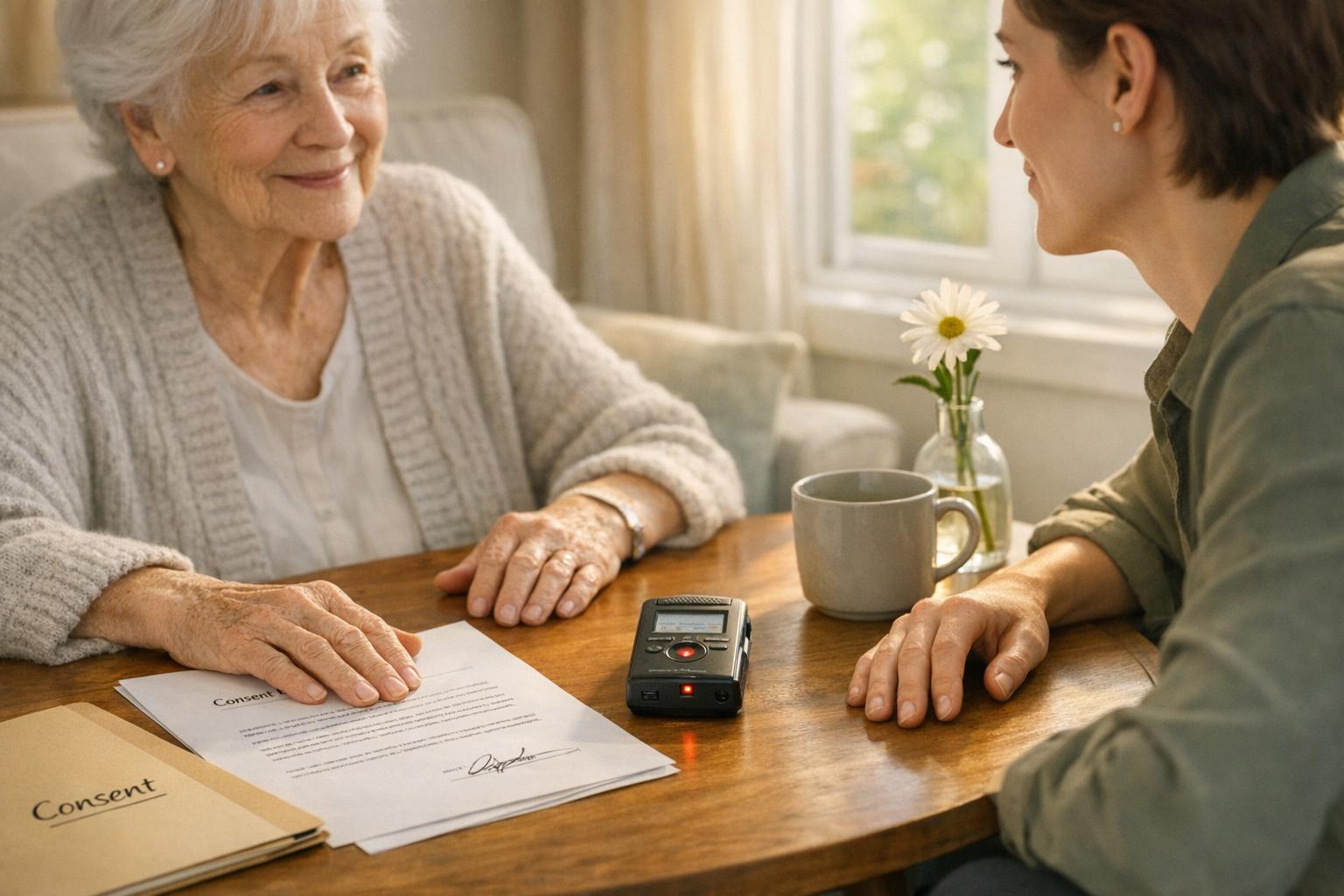
When recording someone's end-of-life story, sensitivity and ethical practices are key. Here's what you need to know:
- Consent Comes First: Always get clear, informed consent. Explain how the recordings will be used, stored, and shared. Respect their right to withdraw at any time.
- Check Mental Capacity: Ensure the person understands the process and can make decisions. If capacity fluctuates, involve trusted family or professionals to assist.
- Respect Privacy and Dignity: Choose a comfortable, private setting. Let them control what they share, skip questions, or use pseudonyms if preferred.
- Communicate With Empathy: Listen actively, avoid judgment, and use open-ended questions to encourage storytelling. Be mindful of their emotions and boundaries.
- Secure Recordings: Use strong passwords, backups, and encryption to protect their stories. Share recordings only with their permission and respect any restrictions.
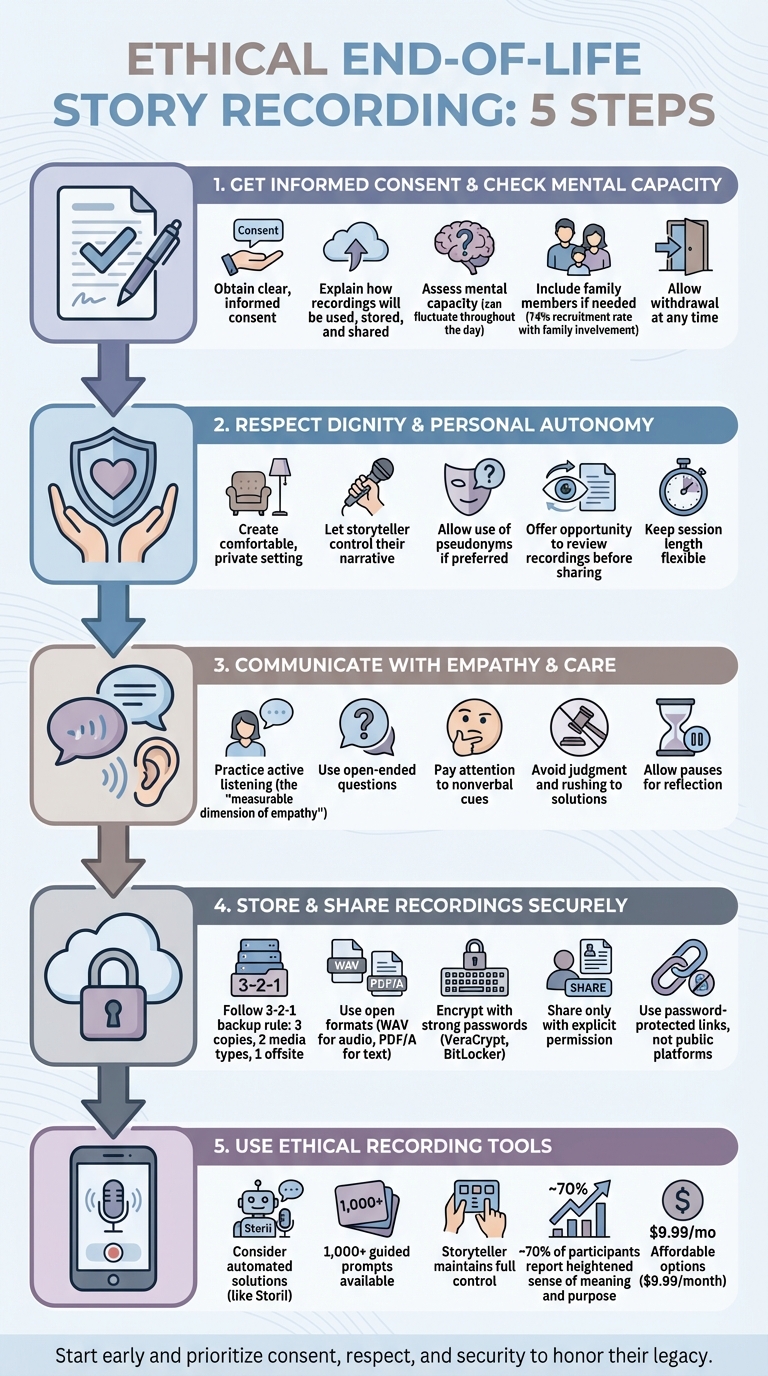
5 Steps to Ethically Record End-of-Life Stories
I Sit With the Dying - Here’s What I’ve Learned
sbb-itb-ce27d7a
Step 1: Get Informed Consent and Check Mental Capacity
Before recording, make sure to obtain clear, informed consent. This means your loved one should fully understand how their story will be used, where it will be stored, who will have access to it, and that they can withdraw consent at any time.
Why Consent Matters
Consent is the cornerstone of ethically recording end-of-life stories. It’s only valid when your loved one has a clear understanding of the facts and potential outcomes tied to the recording process. They need to know how their story will be handled, who might access it, and how long it will be kept. Without this transparency, trust could be compromised, and their legal rights might even be affected.
"Informed consent... can be said to have been given if it is based upon a clear appreciation and understanding of the facts, implications, and future consequences of an action." - Oral History Society
Consent must always be active and voluntary - it cannot be assumed from silence or inaction. Your loved one should feel no pressure to participate, and their decision to decline should never impact the care or services they receive. They should also feel free to pause the conversation, skip any questions that feel too personal, or even withdraw entirely at any point.
"Oral historians insure that narrators voluntarily give their consent to be interviewed and understand that they can withdraw from the interview or refuse to answer a question at any time." - Oral History Association
To make the process clear, provide a written explanation of the project. Use plain, easy-to-understand language - steer clear of legal jargon. Be upfront about potential impacts, like how sharing sensitive details could influence family relationships or how stories posted online might remain available indefinitely. Discuss any boundaries they want to set, such as avoiding certain topics or deciding whether to use their real name or stay anonymous.
How to Check Mental Capacity
Some individuals may not have the mental capacity to give informed consent, especially those with conditions like dementia, severe mental illness, or those nearing the end of life. Mental capacity isn’t a fixed state - it can vary throughout the day. For example, someone may be more alert in the morning but struggle later due to fatigue or confusion.
To assess their capacity, evaluate whether they understand the purpose of the recording (see our guide on how to interview someone with dementia), the potential risks and benefits, and if they can clearly communicate their decision. This task-specific approach is more effective than relying solely on general cognitive tests.
Consider holding a pre-interview meeting to explain the project’s goals and their rights, such as the ability to withdraw at any time. Pay attention to how they respond - if they seem unsure or have trouble following the discussion, involve a trusted family member or healthcare professional to help them make an informed decision. Research suggests that including family members in the consent process for older individuals with cognitive challenges can lead to a recruitment rate as high as 74%. During the recording session, check in periodically to confirm they’re comfortable continuing, as their capacity may fluctuate even within the same interview.
In cases where full legal capacity is lacking, aim to obtain their assent - an informal agreement to participate. This approach respects their autonomy while ensuring they remain at ease throughout the process.
Once you’ve confirmed consent and capacity, focus on maintaining their dignity by creating a private, comfortable setting for sharing their story.
Step 2: Respect Dignity and Personal Autonomy
Once consent is secured, the next step is fostering an environment where your loved one feels valued and in control. Their comfort, privacy, and ability to tell their story on their own terms should take center stage. This helps create a space that prioritizes both dignity and autonomy.
Create a Comfortable and Private Setting
The setting plays a big role in helping someone feel at ease while sharing their story. Pick a quiet, distraction-free place where your loved one feels relaxed. This might be their bedroom, a cozy spot in the living room, or any location where they feel most at home.
If you’re using recording equipment, set it up in a way that captures clear audio or video without being intrusive. Before starting, have a brief conversation to explain the process, perhaps using life story recording prompts to set expectations.
Keep the session length flexible. Some days, they might need breaks or prefer to end early, while on other days, they may feel more energetic and want to continue. Be ready to adjust based on how they’re feeling.
Let Storytellers Control Their Narrative
A respectful environment is just the start - true respect means giving your loved one full control over their story. Remind them at the beginning of each session that they decide what to share and how to share it.
"In recognition of the fact that you, the narrator, own the words you speak in the interview, the formal agreement is your opportunity to provide permission for others to have access to and use your interview." - Oral History Association
Encourage them to speak in a way that feels natural, using their own voice and style rather than sticking to a strict format. This approach is particularly effective when recording stories with generational context to ensure historical accuracy. If there are topics they’d rather avoid or if they want to use a pseudonym for additional privacy, respect those choices. You can also offer them the chance to review recordings or transcripts before they’re shared with others, giving them the freedom to make edits or set boundaries.
Step 3: Communicate with Empathy and Care
Once you've created a comfortable setting, the way you interact during the recording becomes essential. Your words and listening style can make all the difference in helping your loved one share life memories and feel secure enough to open up about their most cherished experiences. By combining a supportive environment with empathetic communication, you can build trust and encourage heartfelt storytelling. This step is all about crafting a conversation that respects and honors their experiences.
How to Listen Actively
After setting the stage, the next step is to focus on how you engage in the conversation. Active listening goes beyond hearing words - it’s about tuning into emotions and meanings. Carl Rogers, a pioneer in this area, noted that "the ultimate goal of active listening was to foster positive change". Pay close attention to nonverbal cues like tone, facial expressions, and body language, as these often reveal more than words alone. Show your engagement through subtle gestures like nodding or leaning in. When they finish a thought, paraphrase to confirm your understanding, saying something like, "It sounds like you felt proud, is that right?" This not only validates their feelings but also encourages them to share more.
"Active listening has even been referred to as the 'measurable dimension of empathy.'" - Olson & Iwasiw
Steer clear of common pitfalls like jumping to conclusions, passing judgment, or offering solutions too quickly. Instead, focus on the emotions behind their words. If they hesitate or seem unsure about continuing, a gentle prompt like "Tell me more" can help them feel comfortable exploring further.
Choose Sensitive and Appropriate Words
The language you use plays a big role in shaping the overall experience. Open-ended questions are your best friend here. Try asking things like, "What was it like when..." or "How do you feel about that now?" When responding, acknowledge their emotions with phrases such as, "That sounds like it was really difficult for you." This approach shows understanding and acceptance without overshadowing their voice.
Let your loved one express themselves in their own words and natural style. Pause often to give them space to reflect, and remind them that they can skip any question or topic they’re not comfortable discussing. Focusing on positive themes like legacy, pride, or joyful memories can help create a safe and encouraging atmosphere for sharing.
Step 4: Store and Share Recordings Securely
Once you've captured those priceless memories, the next step is to ensure they’re safe and secure. The Oral History Association recommends planning for proper storage and care of recordings right from the beginning. This proactive approach helps protect the integrity of your project.
How to Store Recordings Safely
The first step is to transfer your recordings immediately and create multiple backups. A practical approach is the 3-2-1 backup rule: keep three copies of your data, store them on two different types of media, and ensure one copy is kept offsite. This setup guards against risks like hardware failure, theft, or natural disasters.
Use open file formats like WAV for audio and PDF/A for text. These formats are more likely to remain accessible as technology changes. Additionally, plan to periodically migrate your files to newer formats to avoid losing access due to outdated technology.
For added security, protect your recordings with strong passwords and encryption. Tools such as VeraCrypt or BitLocker can secure local storage, while hardware-encrypted USB drives provide an extra layer of safety. If you opt for cloud storage, choose a provider that adheres to data privacy laws and allows you to control sharing settings.
According to the U.S. Department of Health and Human Services, "The Security Rule defines 'confidentiality' to mean that data or information is not made available or disclosed to unauthorized persons or processes."
Once your files are safely stored, you can focus on sharing them responsibly.
How to Share Stories with Family
Before sharing, ensure the storyteller has given consent for distribution and access. As the Oral History Association highlights:
"The interview should not be made public until the narrator, as the original recording's copyright holder, has provided formal authorization to do so."
Respect the storyteller’s wishes if they prefer to keep recordings private, redact sensitive portions, or limit access. Sharing should always align with their preferences.
When sharing with family, opt for secure methods like password-protected links instead of public platforms. Services like Storii offer Family Portals, where you can control who has access to specific recordings.
If the recordings contain sensitive details such as names or locations, consider editing the audio or redacting parts of the transcript before sharing more broadly. Always document key information - like the interviewee, date, and location - to maintain context without compromising privacy.
Step 5: Use Storii for Easy, Ethical Recording

Storii offers a straightforward way to preserve life stories while prioritizing consent and dignity. Its design makes memory preservation accessible, even for those who may not be tech-savvy.
How Storii Simplifies the Process
Storii operates through automated phone calls, eliminating the need for internet access, apps, or extra devices. Storytellers receive up to three scheduled calls per week at their preferred times. Each call presents a question from a collection of over 1,000 life story prompts, with answers capped at 10 minutes.
This method promotes privacy and independence, allowing storytellers to share their memories without feeling rushed or pressured. The prompts guide them through their stories in a structured, manageable way, helping to organize their memories chronologically.
After each call, Storii transcribes the recording - typically within two minutes - and provides the content in both audio and text formats. Families can download these as audiobooks or PDFs, creating cherished keepsakes. As Storii explains:
"Recording a life story in their own words and voice is a project that can give individual's a sense of deeper connection with their own identities."
Benefits for Families
Storii not only simplifies the recording process but also ensures families can securely access and preserve these memories.
The storyteller retains full control over who can access their recordings. Inviting family members is as simple as dialing the service number, pressing "3", and entering a phone number. All stories remain private and secure, accessible only to those the storyteller explicitly invites.
Family members are notified via SMS whenever a new recording is completed. Using a free Storii account, they can listen to the audio, view transcripts, and even add photos or videos. They can also make transcription edits to ensure accuracy, all while respecting the original intent of the storyteller.
At $9.99 per month or $99 annually, Storii offers an affordable and user-friendly way to preserve legacies. This makes it especially meaningful in hospice and palliative care, where recording life stories can provide comfort and connection.
With its easy-to-use features, Storii ensures that memories are preserved securely and ethically, creating lasting treasures for reflection and sharing.
Common Ethical Problems and How to Handle Them
When recording end-of-life stories, even with the best intentions, challenges can arise. Sensitive topics, emotional boundaries, and family dynamics often come into play. Handling these situations thoughtfully is crucial to preserving the storyteller's dignity and ensuring their narrative remains authentic. Here’s how to navigate these common hurdles.
How to Handle Sensitive Topics
Recording someone's life story can bring up painful memories or unresolved trauma. Some storytellers may choose to avoid certain topics, while others might struggle with guilt or discomfort. At the same time, family members may hope these stories are shared for their own healing. Balancing these dynamics requires care and preparation.
Start by sharing a list of potential questions with the storyteller ahead of time. This gives them a chance to reflect and decide what they’re comfortable discussing. During the consent process, ask directly if there are any topics they’d prefer to avoid - and honor those boundaries.
Ease into the session with light, neutral topics, like favorite childhood memories or how they met their spouse or career stories. This approach can help build trust before moving into more complex areas. For example, biographer Rhonda Lauritzen collaborated with Heidi Posnien between 2020 and 2025 to document her experiences during World War II for A Child in Berlin. Instead of jumping into broad, overwhelming topics like "Tell me about the war", Lauritzen used specific, focused questions about life events. This allowed Heidi to open up gradually, including sharing a vivid memory of being alone at age 9 during a bombing raid.
Open-ended questions such as "Why?" or "How did that make you feel?" give the storyteller control over how deeply they want to explore an experience. If the conversation becomes emotionally intense, taking a short break can provide some relief and help the storyteller feel more at ease.
It’s also important to revisit boundaries during each session. For instance, a storyteller might be willing to share a sensitive memory with family but not want it included in a public record. Storytelling expert Kate Marple emphasizes:
Telling a story about your life can be an empowering experience if you are in control of what is shared and how.
If someone declines to participate in an interview, respect their decision. You can always revisit the idea later if they change their mind.
Creating a safe space for sensitive topics helps set the tone for managing family input effectively.
Balance Family Input with Individual Choice
While family members may have specific questions or hopes for the recording, the storyteller’s voice should always take precedence. Ethical storytelling prioritizes their autonomy and comfort, even if it means setting boundaries with family.
The Oral History Association offers clear guidance on this:
Interviewers must respect the rights of interviewees to refuse to discuss certain subjects, to restrict access to the interview, or, under certain circumstances, to choose a pseudonym.
To avoid misunderstandings, secure a signed release form that outlines access rights and any restricted topics. This document can help resolve disputes if they arise later.
If the storyteller is worried about family reactions to a difficult truth, consider offering solutions like limiting access to certain parts of the recording for a set period or using a pseudonym to protect their privacy. Above all, the storyteller should feel in control of their narrative. Clearly communicate how the recordings will be preserved and accessed, ensuring everyone involved understands the plan.
Hospice Bereavement Coordinator Laurrana Leigon reminds us of the importance of this approach:
The most important thing is to carry the mindset that this is a sacred space... it's a delicate time and should be oriented toward the person who is transitioning.
Conclusion
Capturing end-of-life stories is a meaningful way to preserve legacies, but it demands careful attention to ethics. This starts with obtaining informed consent and ensuring the storyteller retains control over their narrative.
Equally important is fostering empathetic communication. As the Swiss Academy of Medical Sciences emphasizes, "In the terminal phase, information becomes less and less important, and the priority should be active, attentive and empathetic listening". Creating a private and comfortable environment allows individuals to feel genuinely heard and valued.
Protecting these stories also requires secure storage solutions, like encrypted platforms with strict access controls, to uphold both privacy and dignity. Research highlights that nearly 70% of dignity therapy participants report a heightened sense of meaning and purpose, showcasing the deep impact of these efforts.
Starting early is key. By using thoughtful questions for writing a life story about childhood, achievements, or advice for loved ones, you can encourage richer storytelling. Tools like Storii simplify this process with over 1,000 guided prompts and secure storage options, helping families preserve irreplaceable memories while adhering to ethical standards.
The stories you gather today will become cherished memories for future generations. By focusing on consent, respect, and security, you’re not just documenting a life - you’re honoring it.
FAQs
What if they change their mind after recording?
Respecting someone's decision to change their mind after recording is essential. Ethical storytelling recognizes that consent isn't a one-time deal - it's continuous. People have the right to withdraw their consent at any moment. If someone asks for their story to be removed or kept private, it's important to honor that request. Open and clear communication about boundaries helps maintain trust and uphold their dignity. Tools like Storii make this process easier by giving users control over their recordings and permissions, ensuring they remain in charge of their narratives.
How do I know they can give consent that day?
To ensure someone can give consent on a specific day, it's crucial to evaluate their decision-making ability at that moment. This means confirming they can understand the decision, recognize its potential outcomes, and clearly express their choice. A trained professional should carry out this assessment using reliable tools, and it might need to be repeated if their condition fluctuates. Always confirm their capacity on the same day consent is documented to guarantee its validity.
How should I share recordings with family safely?
Sharing recordings securely requires careful attention to privacy and confidentiality. Start by organizing your recordings with clear labels - like dates or specific topics - so they’re easy to find and manage. When it’s time to share, consider formats like audio files, PDFs, or transcripts, depending on what works best. Always use private channels such as email, SMS, or secure links to ensure the information stays protected. Limit access to trusted family members to safeguard everyone’s privacy and maintain confidentiality.
Related Blog Posts

Storii Gift Box
Best for special occasions such as Mothers Day, Fathers Day, Birthdays and the Holidays.

